Client Engagement Strategy

Role: Product Marketing & Client Engagement

Objective: Product Adoption & Usage Growth

Time frame: 6 Months

Segments: Cross-border • SMB/Payroll • Remittance

Market: United Kingdom

Visa Direct

Executive Summary

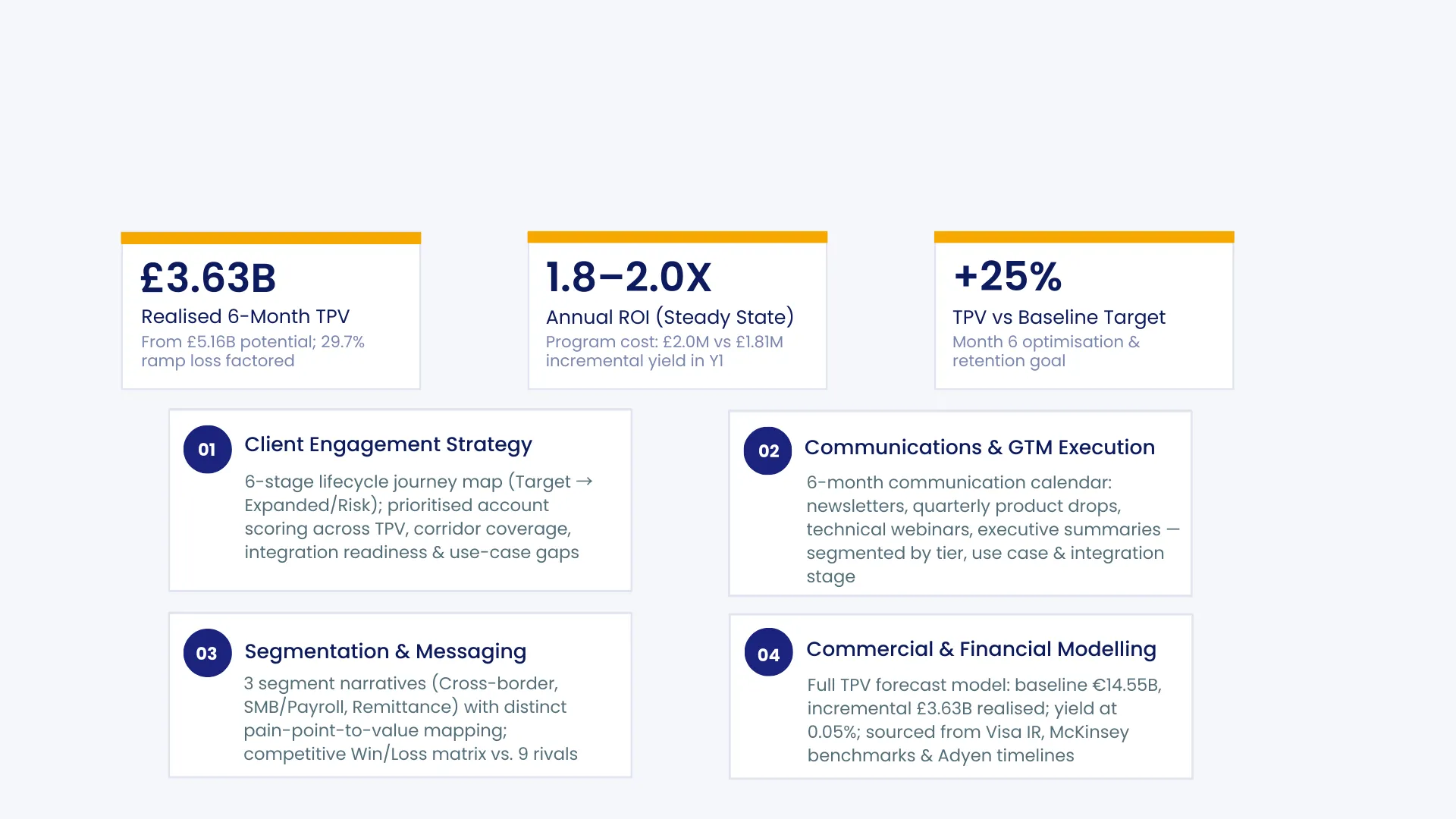
A 6-month product marketing strategy to accelerate Visa Direct adoption, activate signed clients, and grow TPV across enterprise and mid-market segments in UK.

*Appendix

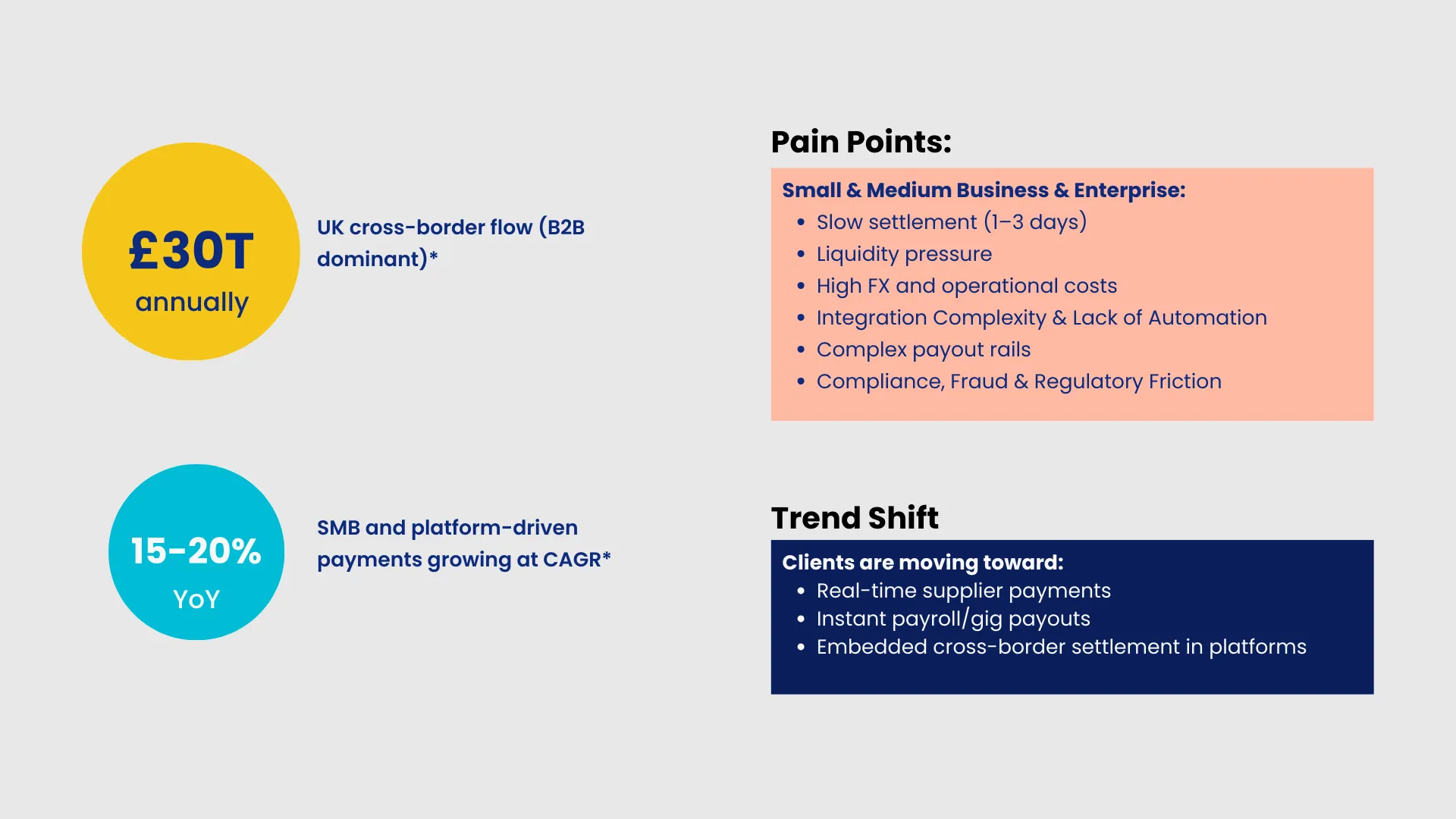
Cross-Border Payments Landscape

*Appendix

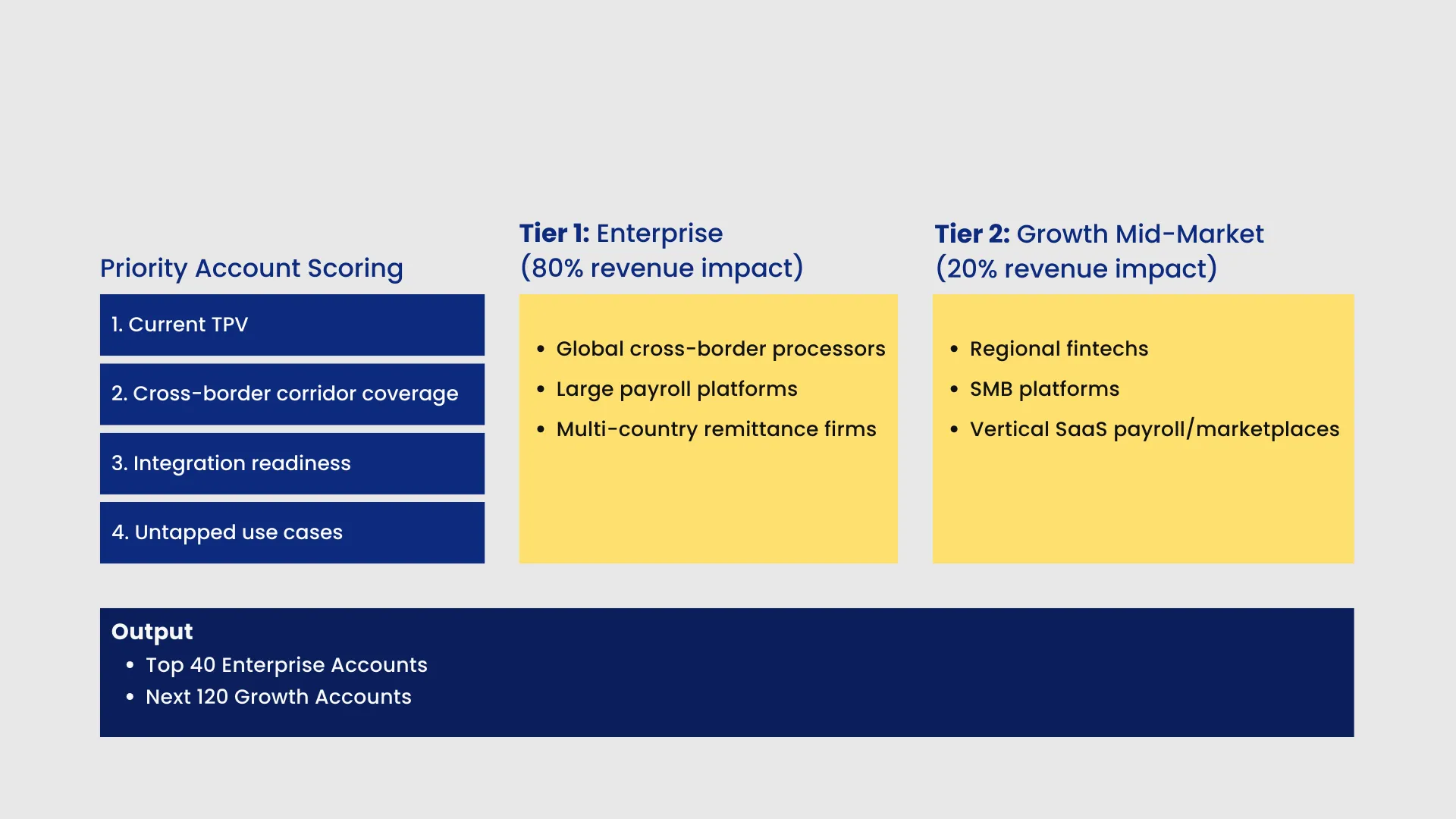
Client Segmentation & Priority Model

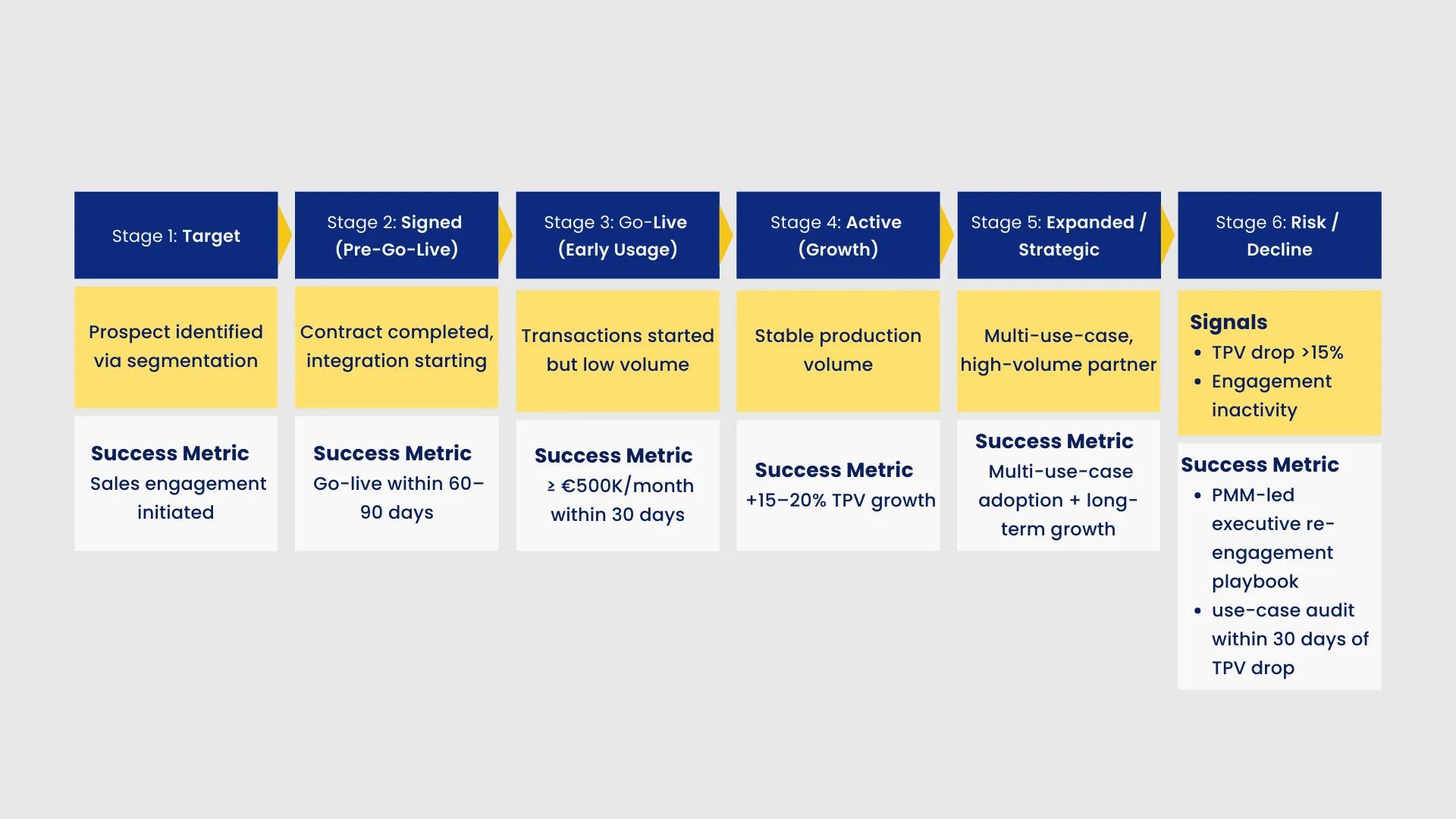
Client Lifecycle Journey Map

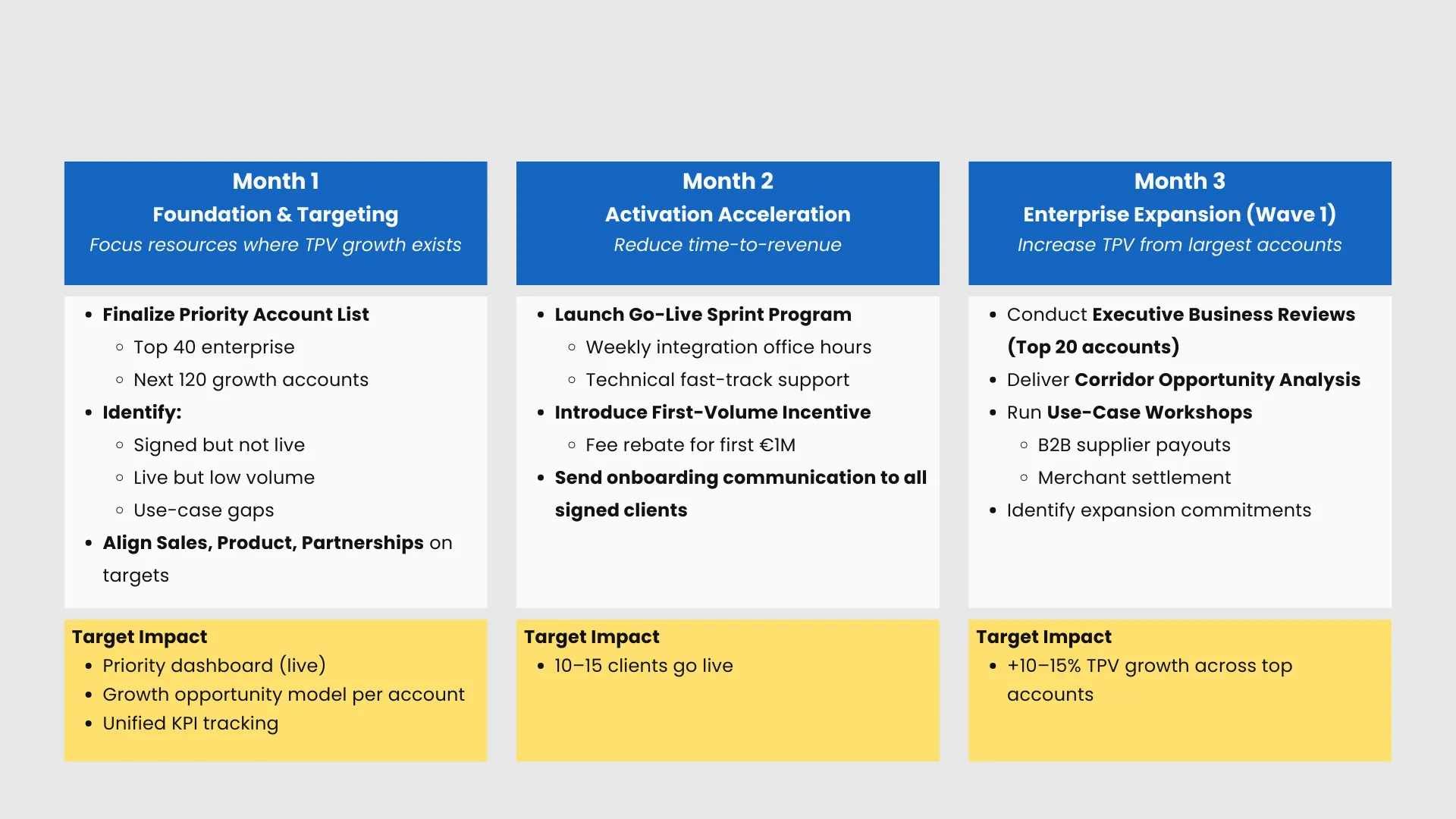
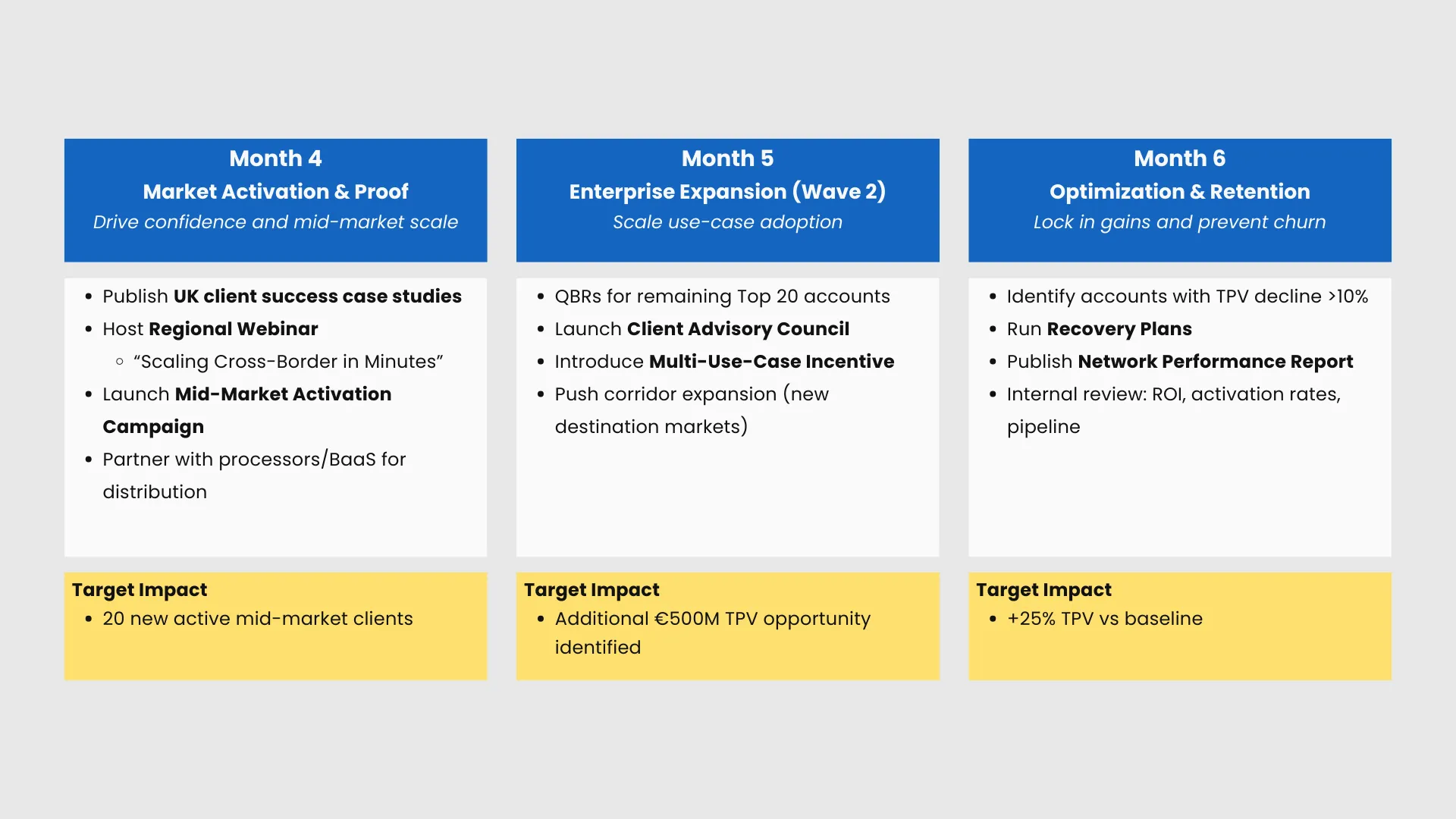
6-Month Client Engagement Roadmap

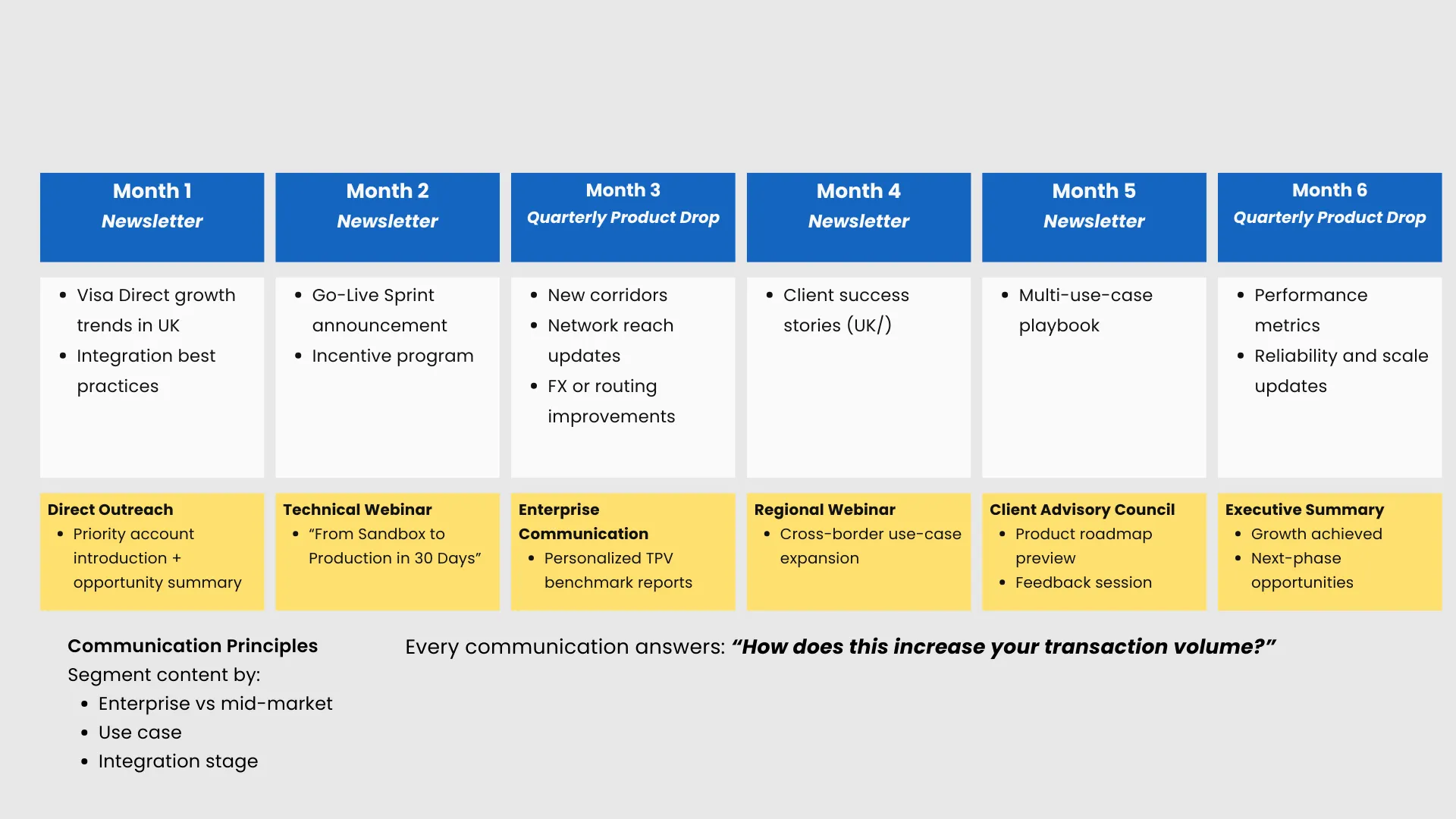
6-Months Client Communication Calendar

Visa Direct UK | Q1 2026 Client Newsletter
Webinar Script — From Sandbox to Production in 30 Days | Visa Direct UK
// webinar_script_v2.1.final
From Sandbox to Production
in 30 Days
Visa Direct UK · Technical Webinar · Client-Facing · 60 Minutes
Date
14 Mar 2026
Time
11:00–12:00 BST
Format
Webinar + Live Q&A
Audience
Signed clients, pre-go-live
Owner
Product Marketing Manager
// Session Runsheet
T+0:00 Welcome & Context Setting PMM (Host)
T+0:05 Why Go-Live Speed Determines TPV PMM (Host)
T+0:12 The 30-Day Activation Framework PMM (Host)
T+0:20 Live Technical Walkthrough: Sandbox → Cert → Production Solutions Engineer
T+0:38 Where Integrations Actually Stall — And How to Unblock Them Solutions Engineer + PMM
T+0:47 What Comes After Go-Live: First €500K TPV PMM (Host)
T+0:52 Live Q&A All Speakers
T+0:58 Close + Next Steps PMM (Host)
01
Welcome & Context Setting
T+0:00 – T+0:05
0:00 – 0:05
Opening — PMM Host
PMM
▶ Go live, hold for ~20 seconds for latecomers. Slide: Title card + agenda

Good morning. Thank you for joining. I'm going to resist the temptation to read out the agenda slide that's currently on your screen — you can see it — and instead start with the question that this entire session is designed to answer.

You've signed with Visa Direct. Your contract is done. There is, right now, a live API sitting in sandbox waiting for your integration. And somewhere in your organisation — whether that's your CTO, your CPO, or your Head of Payments — someone is asking: how long until we're actually moving money?

The industry average, based on our data across UK and European clients, is 90 to 120 days from contract to first live transaction. Our clients who follow a structured activation approach get there in 30. This session is about how.

The 30-day framing is the hook. Pause here briefly after delivering it — let it land before moving on.

We have 60 minutes. I'll cover the commercial case for speed. My colleague from Solutions Engineering will walk you through the actual integration path live. We'll talk about the three places most integrations stall — and how to unblock them. And we'll leave you with a 5-step action plan you can take straight into your next engineering sprint.

If you have questions, put them in the chat. We'll take a structured Q&A from minute 52. Let's get into it.

▶ Advance to slide: "The cost of waiting"
02
Why Go-Live Speed Determines TPV
T+0:05 – T+0:12
0:05 – 0:12
Commercial Context — PMM Host
PMM
▶ Slide: Ramp curve chart — Month 1-6 TPV by activation timing

Here's something that doesn't come up enough in integration conversations. Every month you're in sandbox is a month of TPV you will never recover.

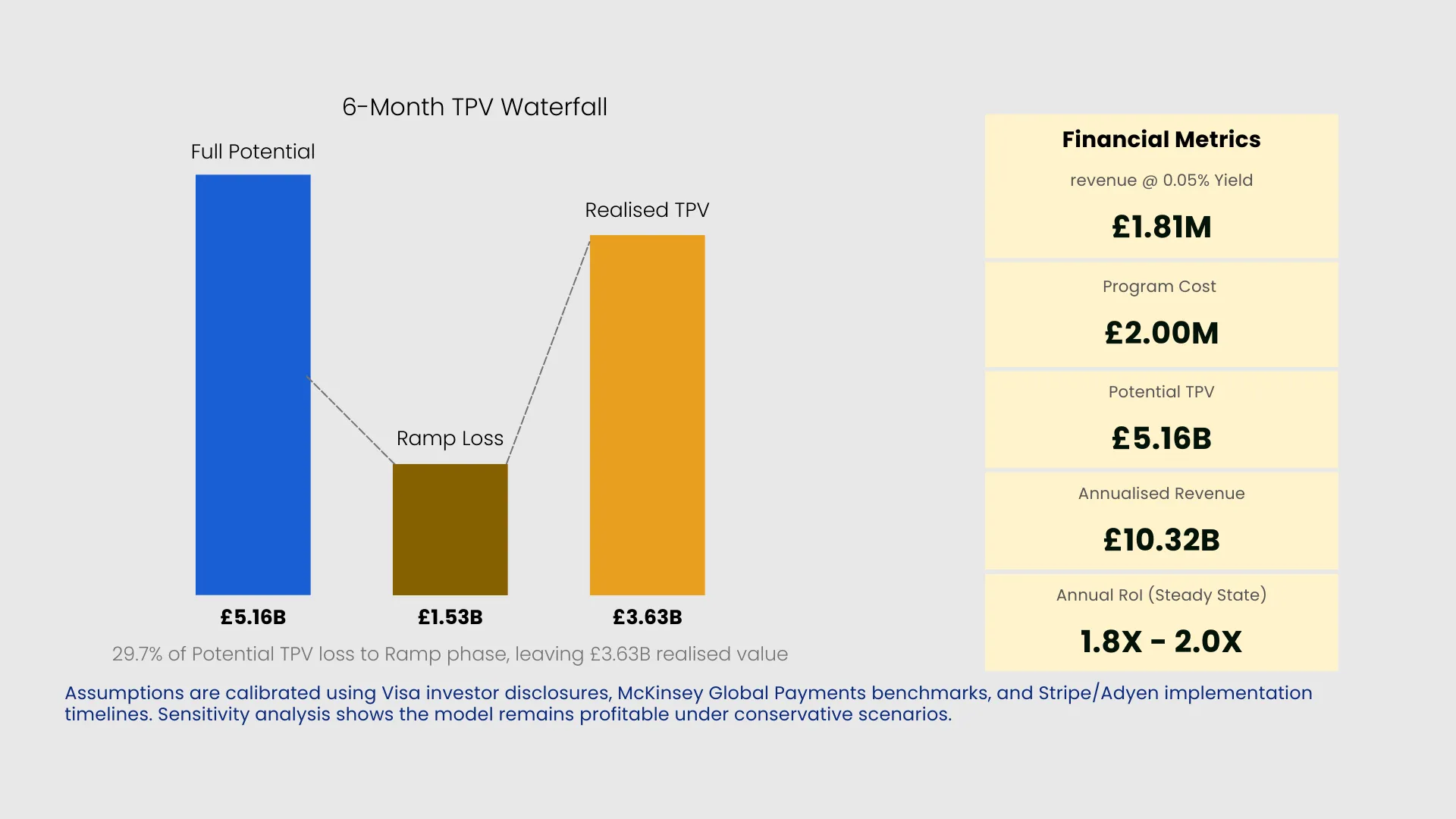
Our 6-month forecast model for the UK client cohort shows a baseline ramp loss of just under 30%. Meaning: if your platform has the potential to process £5 billion in payment volume through Visa Direct over a 6-month period — which is a real number for platforms at scale — a 3-month delayed go-live costs you approximately £1.5 billion in realised volume. Not revenue. But the volume on which your revenue is calculated.

29.7%
avg ramp loss
30 days
fast-track target
£1.53B
typical ramp loss (£5B potential)
0.05%
yield on TPV

The second reason speed matters is compounding. Clients who reach their first €500K/month TPV milestone within 30 days of go-live consistently reach €1M within 60 days. It's not linear — early activation builds internal momentum, it builds customer adoption, and it builds the data you need to unlock corridor expansion conversations with us.

Clients who take 90+ days to reach €500K almost always plateau there. The activation window closes, engineering attention moves elsewhere, and the platform ends up with a Visa Direct integration that processes a fraction of its potential volume.

If anyone in the audience is from a client currently in this plateau scenario — that's exactly who this section is for. Don't shy away from that. The next section gives them a clear path out.

This is not a technology problem. It is an activation problem. And it is entirely solvable. Let me show you how.

▶ Advance to slide: "The 30-Day Activation Framework"
03
The 30-Day Activation Framework
T+0:12 – T+0:20
0:12 – 0:20
Framework Walkthrough — PMM Host
PMM
▶ Slide: 4-week framework with milestones

Clients who go live in 30 days follow a consistent pattern. It's not about working faster — it's about sequencing correctly. Here's the framework we've distilled from our fastest activations.

Week 1: Scope and credential setup. The single most common reason integrations run long is credential delays. Your developer needs API keys, test account credentials, and access to the Visa Developer Centre before they write a single line of code. This sounds obvious. It takes most clients 2–3 weeks to sort out. If you do nothing else from today, go back to your organisation and confirm that credentials are in your developer's hands before your next sprint starts.

  • Confirm API credentials issued — target Day 2 at the latest
  • Scope your first use case to the simplest possible transaction: single push-to-card, domestic, fixed amount
  • Identify your internal compliance sign-off path now — don't leave it to Week 3

Week 2: Sandbox integration and initial test cases. Your target here is your first successful sandbox transaction by Day 10. Not a perfect integration — a working one. The Visa Developer Centre documentation covers the core endpoints. Our Solutions Engineering team runs weekly office hours during this phase for clients in the fast-track program — your Solutions Engineer's contact is in the onboarding email you received.

Week 3: Certification. Certification is the stage most clients underestimate. It is not a rubber stamp — it is a structured test suite. The good news: we publish the test cases in advance. Clients who review the certification checklist at the start of Week 1 — not Week 3 — pass first time 80% of the time. Clients who encounter it fresh in Week 3 almost always need a second attempt, which adds two weeks.

Key CTA embedded here: "The certification checklist is in your onboarding documentation. If you don't have it or haven't reviewed it, that's your action item for today. I'll also drop a link in the chat now."

Week 4: Production deployment and first live transaction. The goal of Week 4 is a live transaction in production — even if it's £1 to a test card. That transaction confirms your integration, starts your TPV clock, and triggers your Client Success onboarding sequence. Everything after this is growth, not activation.

→ TRANSITION: "My colleague is now going to walk you through what this looks like technically — live, in the actual developer environment."
04
Live Technical Walkthrough
T+0:20 – T+0:38
0:20 – 0:38
Sandbox → Cert → Production — Solutions Engineer
Solutions Engineer
▶ SE takes over. Screen share: Visa Developer Centre, live sandbox environment. PMM drops certification checklist link in chat.

[SE intro — 1 minute] Thanks. I'm going to walk you through exactly what your developers will experience, using the actual Visa Developer Centre. No slides — just the real environment. If you're on the call and you're a developer or technical lead, pay close attention to the credential setup and the certification flow — those are the two places I see the most time lost.

Step 1: Developer Centre account and app creation. [Live demo: navigate to developer.visa.com, create app, show API key generation] Your developers need to create a project in the Developer Centre. Each project generates a unique API key pair. Keep your sandbox and production keys separate — I've seen production outages caused by sandbox credentials being used in error. Name your project clearly, including the environment.

  • Show: Project creation flow (approx. 3 minutes live)
  • Show: API key download — emphasise storing private key securely
  • Point to: Documentation index — highlight Push Funds endpoint as starting point

Step 2: First sandbox transaction. [Live demo: Postman collection or equivalent, send Push Funds request, show 200 response] I'm using the Postman collection we provide — link is in the chat. You don't have to use Postman but it's the fastest way to validate your environment. Here is a Push Funds call — this is the core Visa Direct transaction type. You can see the request structure: sender, recipient card number in sandbox format, amount, currency. Send it. And there's the 200.

▶ Pause 5 seconds after showing 200 response. Let it land. This is the visual payoff of the session.

That transaction — in sandbox — represents the same integration that moves billions of pounds through this network every month. The API call you just watched is the same one Western Union, Remitly, and hundreds of UK fintechs use in production. The complexity is in the edge cases and the certification, not in the core call.

Step 3: Common response codes and error handling. [Show: error code reference, walk through top 5] Before certification, your developers should be handling at minimum: insufficient funds responses, invalid recipient errors, and compliance holds. These are the three that appear most often in UK client integrations. The certification test suite will test all of them.

Step 4: Certification walkthrough. [Show: certification portal, test case categories] Certification has four test categories: core transaction flows, error handling, webhook receipt and acknowledgement, and for clients processing above a certain volume, fraud signal handling. I'll flag this: the webhook tests are the most commonly failed. Your server needs to respond within 5 seconds and return a 200. Make sure your engineering team knows this before they submit for certification, not during it.

→ TRANSITION TO PMM: "I'll hand back now — happy to go deeper on any of these in the Q&A."
05
Where Integrations Stall — And How to Unblock Them
T+0:38 – T+0:47
0:38 – 0:47
Blockers & Playbook — PMM Host
PMM
▶ Slide: "The 3 Blockers" — credential delay / compliance bottleneck / webhook failure

Based on our analysis of UK client integrations over the past 18 months, three blockers account for over 80% of delayed go-lives. I want to give you the specific playbook for each one.

Blocker 1: Credential and access delays. This is the most common and the most preventable. The fix is simple: your Client Success Manager can issue sandbox credentials within 24 hours of a signed contract. If you don't have them, call your CS lead today — not next week. If credentials have been issued but your developers haven't received them, that is an internal routing problem, not a Visa problem. Assign a named owner for API credential management in your organisation.

COMMON QUESTION: "Our security team needs to review credentials before they go to developers."
Valid process — but run it in parallel, not sequentially. Your security review and your developers' sandbox setup can happen simultaneously. A 5-day security review that delays your developer by 5 days is 5 days of ramp loss. Most security reviews of OAuth2 API credentials take 2–3 days; get them started on Day 1.

Blocker 2: Compliance sign-off bottleneck. Going live with Visa Direct requires internal compliance approval at your organisation — typically covering KYC/KYB flows, sanctions screening, and transaction monitoring thresholds. These are your compliance team's requirements, not ours. The mistake clients make is leaving this conversation until Week 3 or 4. Your compliance team needs 2–3 weeks to review a new payment rail. Start that conversation in Week 1. Give them our compliance documentation pack — your CS lead can send it. Get a named date for sign-off before your engineering build begins.

Blocker 3: Webhook certification failure. As my colleague noted — 5 second response window, return a 200. Beyond that, the most common cause of webhook certification failure is environment-specific firewall rules that block inbound calls from Visa Direct IP ranges. Your network team needs to whitelist the Visa Direct webhook IP range before certification. That list is in the Developer Centre documentation. Again — do this in Week 1, not Week 3.

This is a good place to offer the Office Hours call-to-action: "If you've hit any of these blockers and you're not sure how to unblock them, our Solutions Engineering office hours run every Thursday at 2pm BST. Link is in the chat. These are small-group sessions — 5–8 clients — and you can get direct answers from our engineers."
06
What Comes After Go-Live: First €500K TPV
T+0:47 – T+0:52
0:47 – 0:52
Post-Go-Live Growth — PMM Host
PMM
▶ Slide: "After Go-Live — the first 30 days in production"

Going live is not the finish line. It's the starting gun. The target for your first 30 days in production is €500K in monthly TPV. That number isn't arbitrary — it's the threshold at which Visa Direct activates your growth services programme, including corridor opportunity analysis and use-case expansion conversations.

Three things drive first-month TPV. First: the number of users or merchants you've enabled on the Visa Direct flow from Day 1. Don't soft-launch with 5% of your volume while you monitor. If your integration has passed certification, it's ready for full volume. Start there.

Second: your customer communication. We have seen clients go live silently — no announcement, no feature flag to customers, no in-app prompt — and wonder why TPV is flat. If your customers don't know they can be paid faster, they won't use it. Build a simple comms moment around your go-live: email, in-app notification, whatever your channel is. It doesn't need to be elaborate. It needs to exist.

Third: monitor your decline rates daily in the first two weeks. New integrations sometimes have higher decline rates due to routing configuration or recipient card type mismatches. We can see your decline data from our side — your CS lead reviews it weekly — but daily monitoring from your side in the first two weeks lets you catch configuration issues before they affect customer experience.

→ TRANSITION TO Q&A: "Let's go to your questions. I can see several in the chat already."
07
Live Q&A
T+0:52 – T+0:58
0:52 – 0:58
Prepared Q&A — All Speakers
Q&A

Read live questions from chat. Below are prepared answers for the most common questions — have these ready.


Q: "Our engineering team is mid-sprint on another project. Is 30 days realistic for us?"
Yes — with a caveat. The 30 days assumes a dedicated developer at 50–60% capacity for the integration period. If your team is at <25% capacity, the realistic timeline is 45–60 days. The framework still applies, just with the phases extended. What we'd recommend: use the dead time productively. Get credentials, start your compliance conversation, and complete your certification checklist review before your engineering sprint begins. That way when your developer is free, the blockers are already cleared.
Q: "We're integrating via a processor/BaaS partner, not directly. Does this framework still apply?"
Partially. If your processor is already a Visa Direct enabler — Stripe, Adyen, Checkout.com, GPS, and others are — your integration is significantly simpler. You may not need direct certification. Check with your processor on their Visa Direct integration path. Your CS lead can confirm your processor's status. In many cases clients come to us and don't realise they already have Visa Direct access through their existing PSP — they just haven't turned it on.
Q: "What are the UK compliance requirements we need to meet before go-live?"
Your core requirements are: a compliant KYC/KYB process for your senders and recipients, sanctions screening on each transaction (or confirmation that your processor handles this), and transaction monitoring in line with your FCA authorisation. We don't prescribe the specific implementation — these are your obligations as an FCA-regulated or FCA-registered entity. We provide a compliance documentation pack that your compliance team can use as a reference. Your CS lead will send it today.
Q: "Can we go live with one corridor and add more later without re-integrating?"
Yes — corridor expansion is configuration, not integration. Once you're live, adding a new corridor is a conversation with your CS lead, a configuration change on our side, and confirmation of compliance coverage for the new market. No code change required in most cases. This is exactly the model we recommend: go live on your highest-volume corridor first, achieve €500K TPV, then expand.
If time allows, take 1–2 live questions from the chat not covered above. Keep answers to 90 seconds each. Signal the close at T+0:57.
08
Close & Next Steps
T+0:58 – T+1:00
0:58 – 1:00
Close — PMM Host
PMM
▶ Slide: "Your 5 actions for this week"

We're at the hour. Let me close with the five actions that, if you do them this week, will put you on the 30-day path.

One: confirm API credentials are in your developer's hands today — not next week.

Two: review the certification checklist now, before your integration sprint begins. Link is in the chat.

Three: open your internal compliance conversation today. Schedule a 30-minute call with your compliance team and share the documentation pack your CS lead will send you.

Four: whitelist Visa Direct webhook IPs with your network team before Week 3.

Five: if you're stuck — or if you want a 1:1 review of your specific integration path — book time with your Client Success Manager. The link to book is in the follow-up email you'll receive within the hour.

Thank you for your time. The recording will be available within 24 hours. We look forward to seeing your first live transaction.

▶ End session. Drop follow-up links in chat: certification checklist, office hours booking, CS Manager contact, recording registration link.
Post-Webinar Follow-Up Checklist
Actions for the PMM to complete within 2 hours of session end:
  • Send follow-up email to all registrants (attended + missed) with recording link, certification checklist, and CS Manager booking link
  • Upload recording to client portal with chapter markers matching the runsheet
  • Share chat Q&A log with Solutions Engineering team — flag any unanswered technical questions for individual follow-up
  • Log attendance data in CRM: segment by client tier, flag Signed-but-not-live attendees for priority CS follow-up within 48 hours
  • Track go-live conversions at 30-day mark: target 18% of attendees live within 30 days (vs 10% industry baseline)
  • Share webinar performance metrics with Sr. PMM / Director within 5 days: registrants, attendance rate, Q&A volume, post-webinar go-live conversion

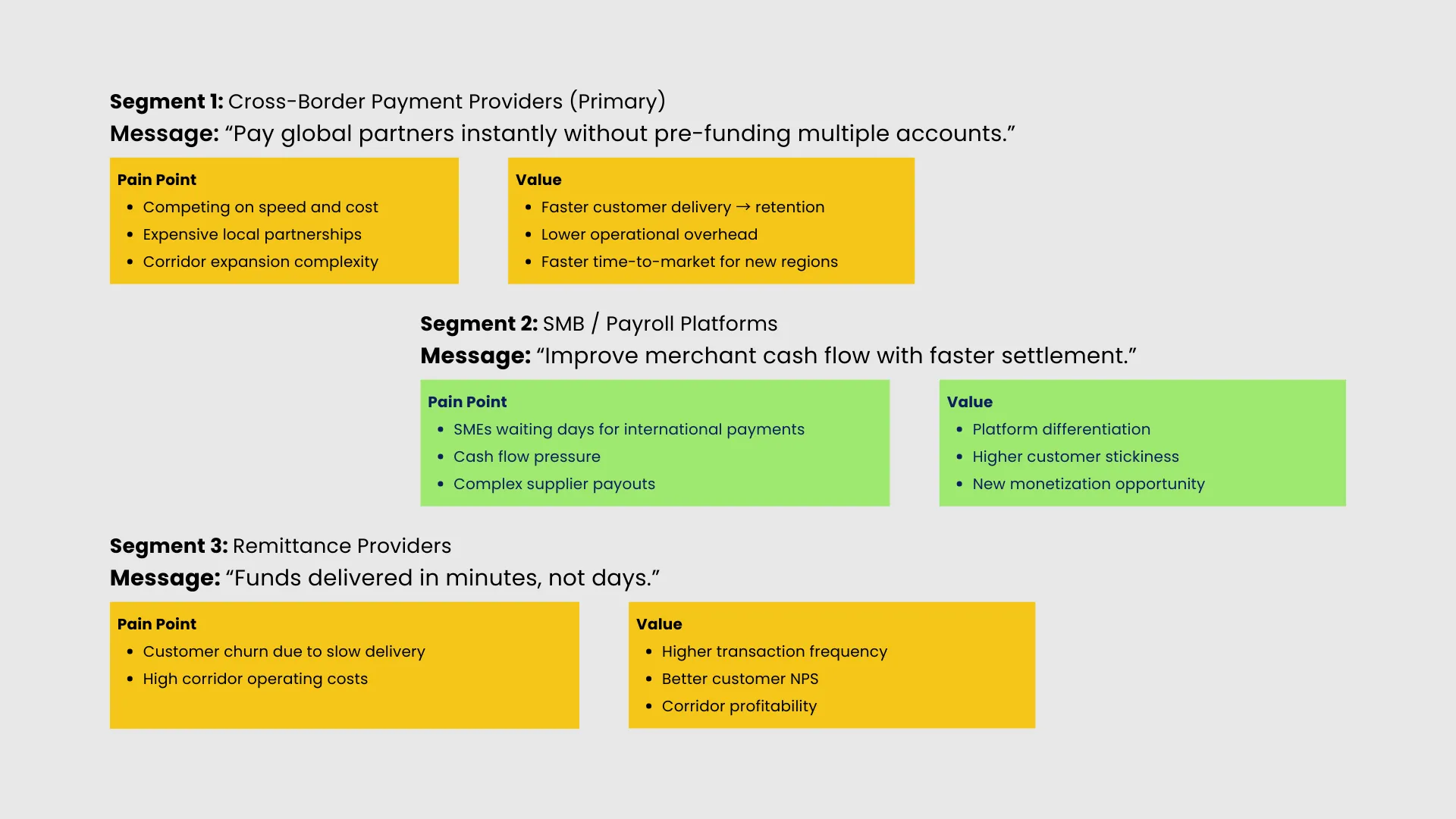
Segment Narrative (Messaging)

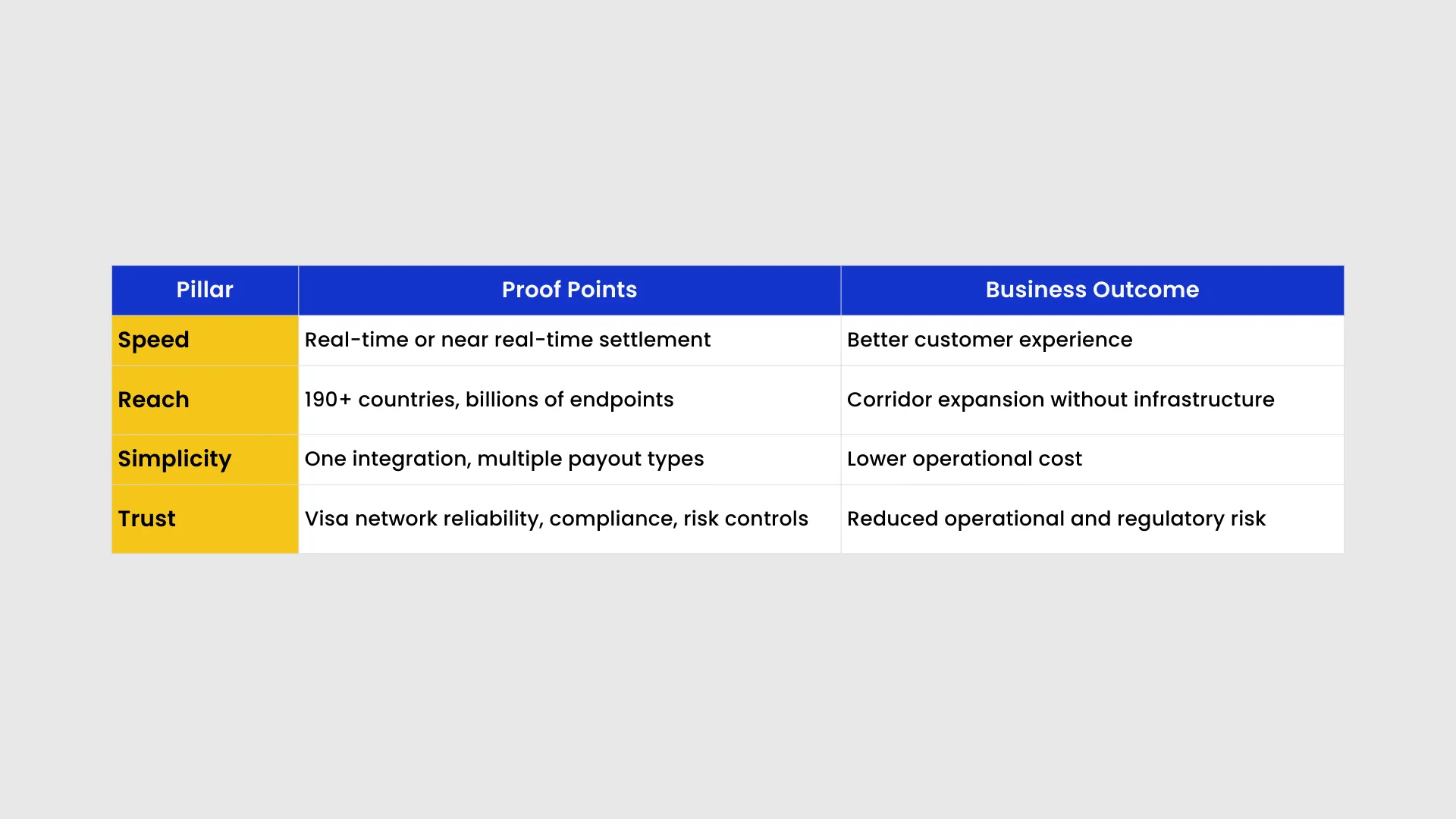
Core Value Pillars

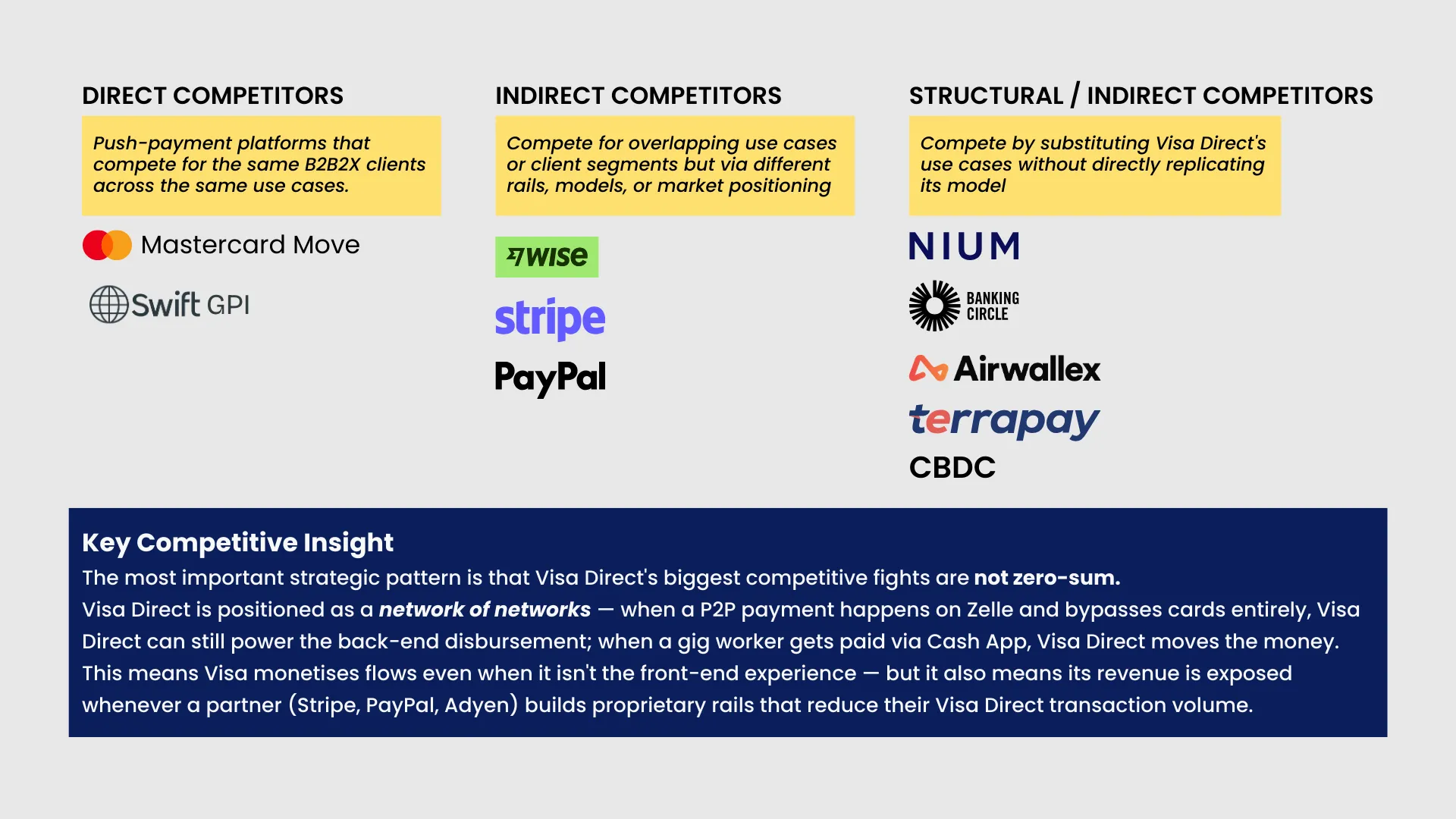
Global Competitive Landscape

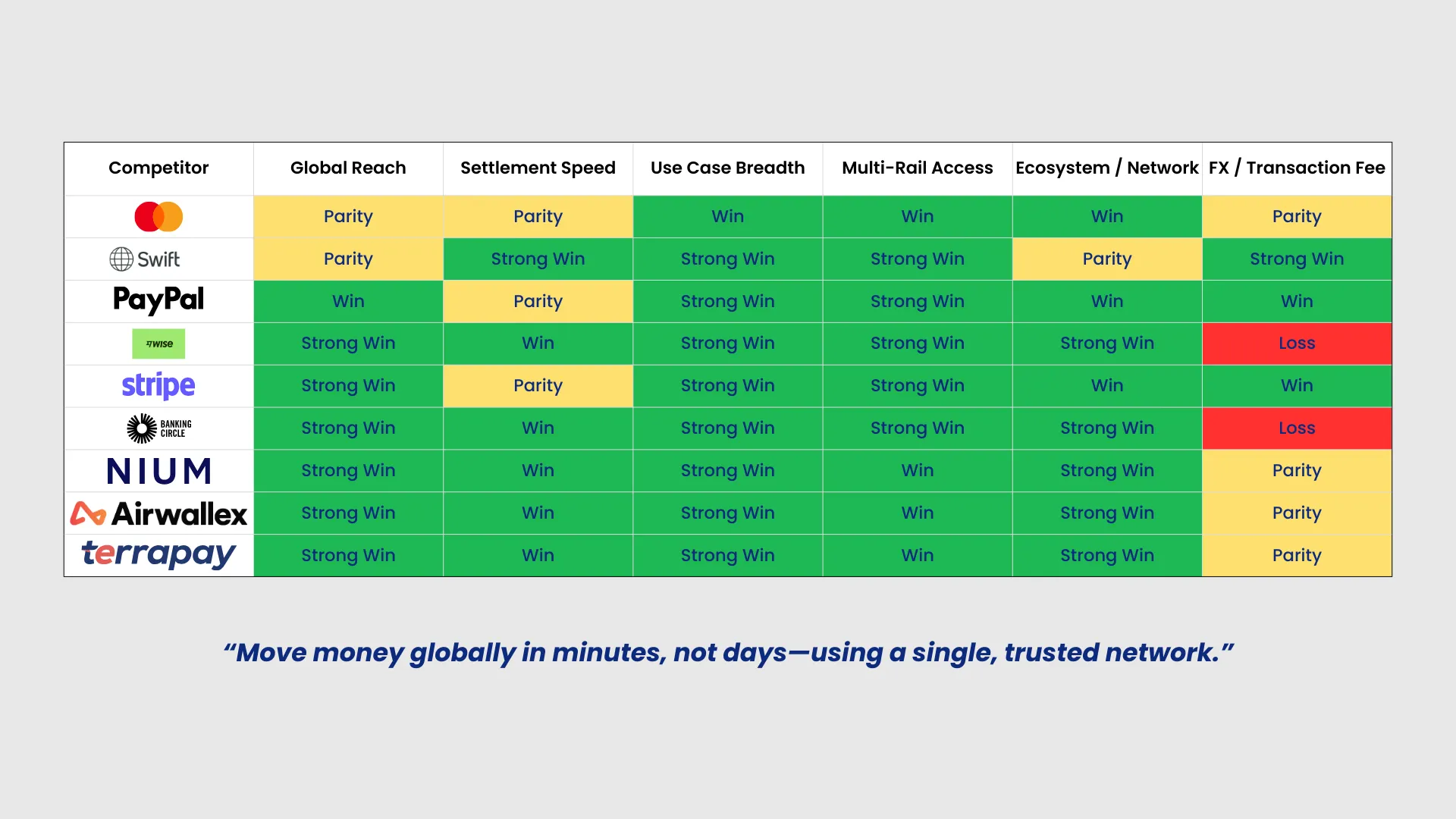
Competitive Positioning (Win/Loss)

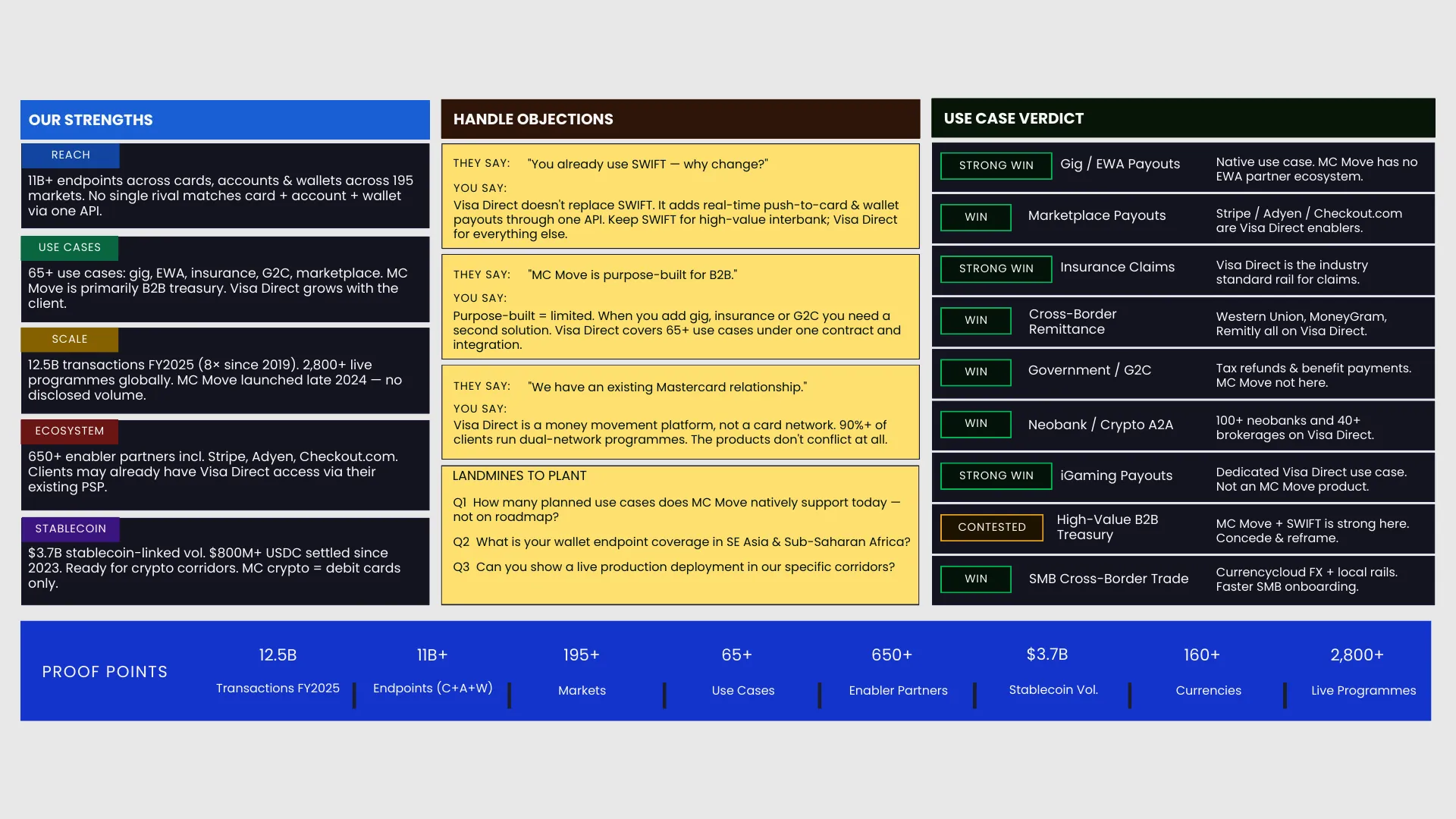
Sales Battle Card

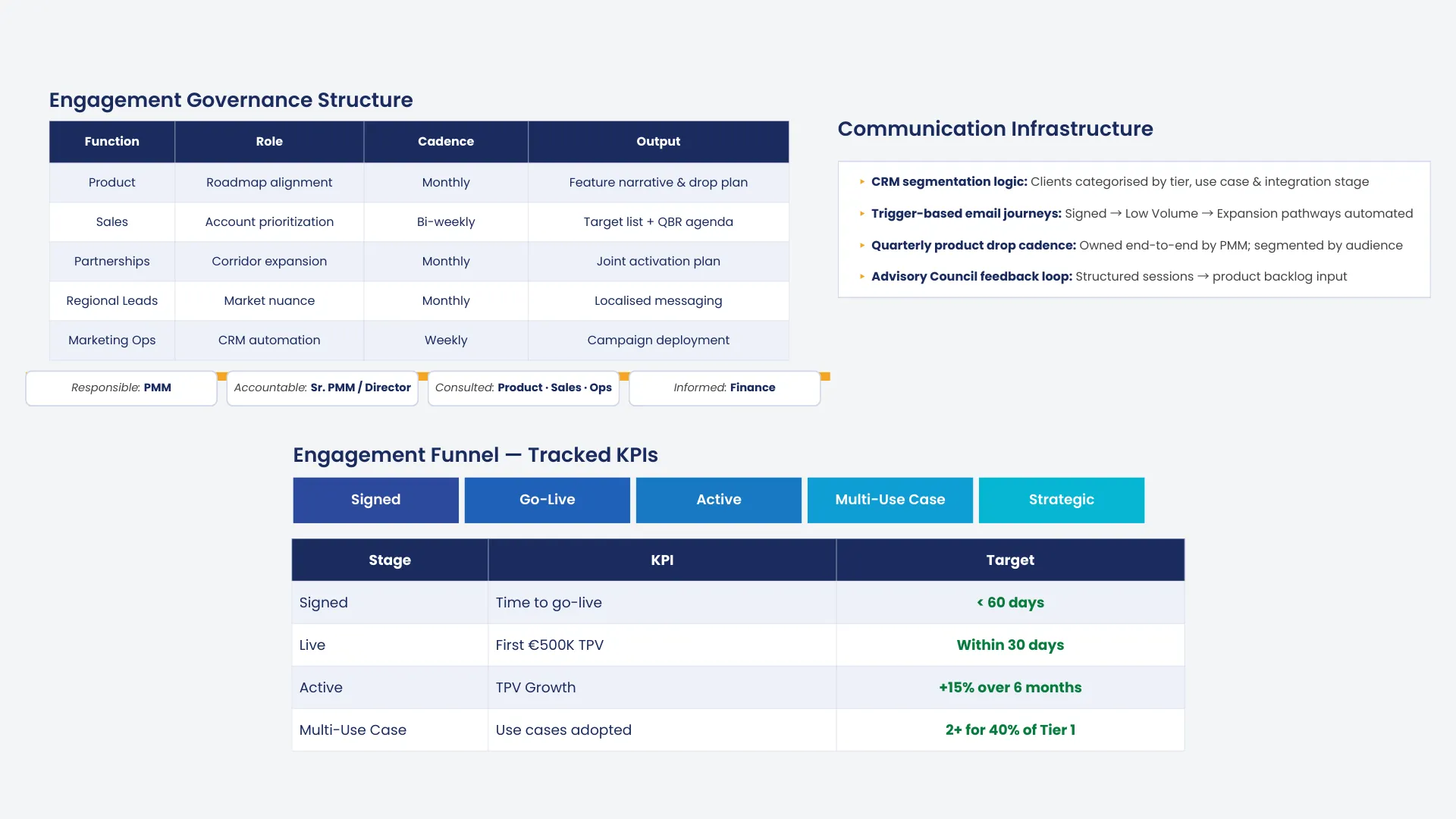
Operating Model — Governance, Ownership & KPIs

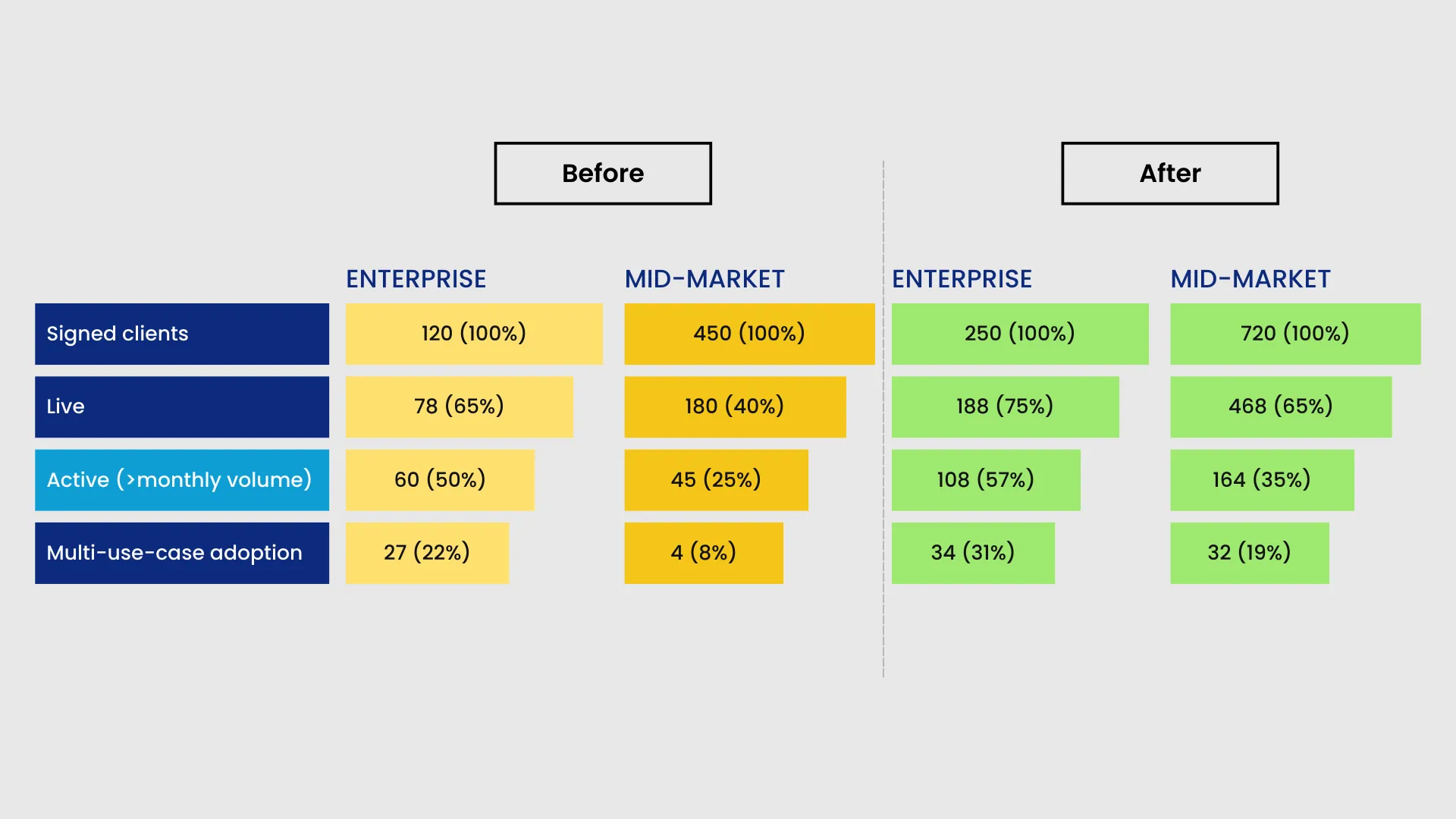
Internal Analysis (modeled network dynamics)

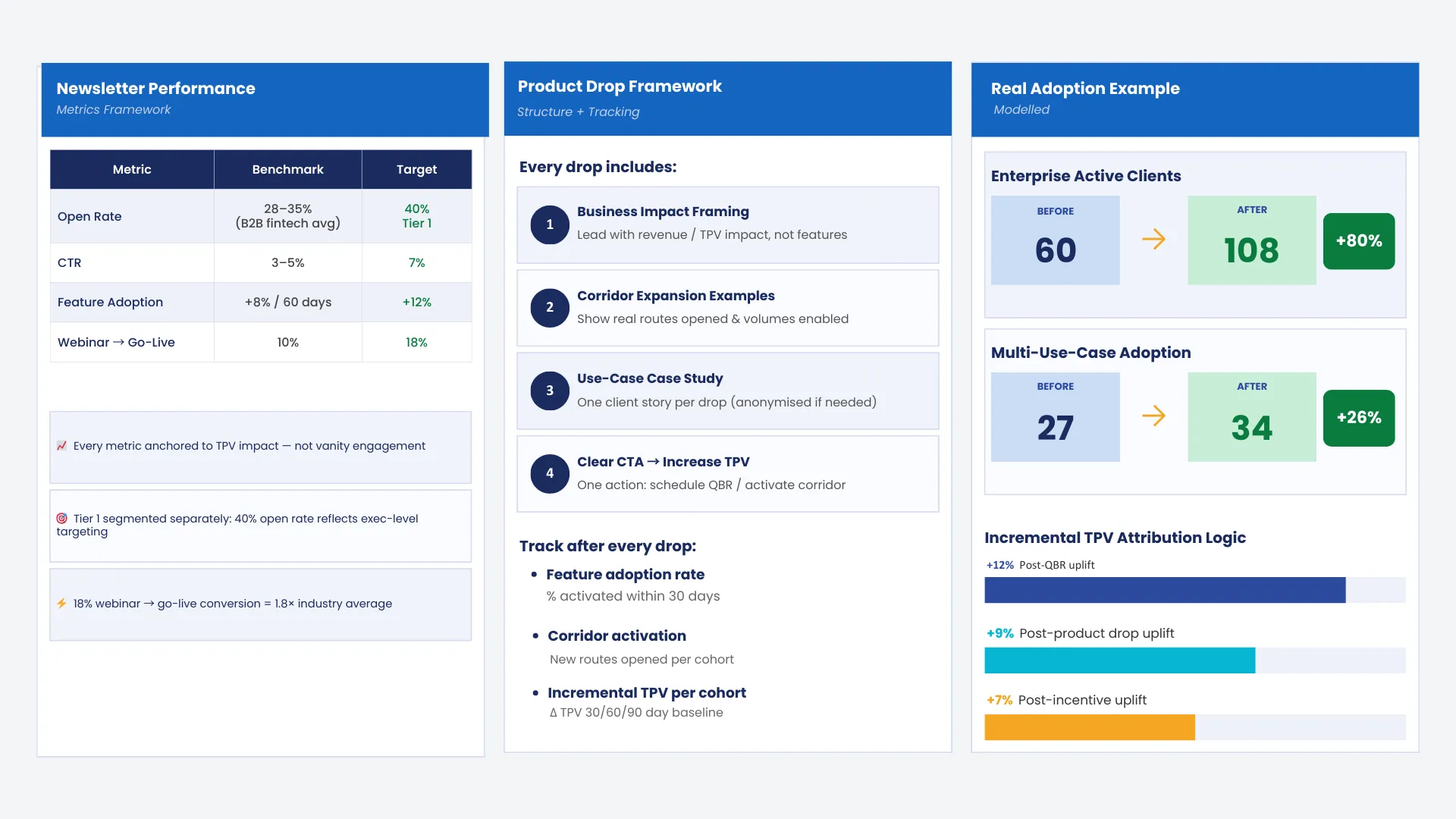
Client Communications → Measured Adoption Lift

*Appendix

TPV Impact & Analysis (6-Month forecast)

*Appendix

Appendix

1. Enterprise Client Concentration       McKinsey Global Payments Report (latest editions)

2. Active Rate (Enterprise 50%, Mid-Market 25%)        Stripe onboarding & launch timelines

3. Adyen implementation timelines: 30–90 days      https://docs.adyen.com/ 

4. Enterprise Expansion Rate = +15% (6 months)         Visa Investor Relations earnings commentary

5. Cross-Border Growth Opportunity (Macro Context)     Visa Annual Report

6. Visa Net Yield = 0.03–0.05%         Visa Annual Report / Investor presentations

7. Program Cost       Gartner CMO Spend Survey